Friday, October 12, 2012

Why a former nun will be ordained a priest

http://www.washingtonpost.com/blogs/guest-voices/post/why-a-former-nun-will-be-ordained-a-priest/2012/10/12/237856f8-14c2-11e2-ba83-a7a396e6b2a7_blog.html

I am passionate about Jesus’ vision for women disciples in our church --- so much so that on Oct. 20, I will be ordained a priest in Atlanta along with five women who will be ordained deacons. The recent third-century papyrus discovery announced by Dr. Karen L. King confirms what I have always known about my own calling, “She will be my disciple.”
In the 1960s, there were few options for women exploring their vocation. Catholicism was uniform and painted in either/or’s but my love for God and early ministries with the people fed my desire to serve. I entered religious life expecting to leave in six months because I believed God was not limited the uniform vision presented by the church in that age. My experience of convent life far exceeded those stereotypes.
The day after I entered the convent, we began college courses. We studied, prayed, worked and laughed. The sisters immediately engaged us in renewing our constitution and ending pre-Vatican practices. Through baptism we were all called to serve.
We moved out of clerical notions that separated us from people into living the gospel mandate in homes, neighborhoods and wherever the marginalized lived. I was in my glory. For the first 12 years as a sister, I worked in systems operated by those “renewed Catholic women”. I was never denied access to any institution of higher learning. For me, Catholic was defined as raising each person to heights of excellence in a discipleship of equals.
However, during the last 10 years of religious life, I met up with a clerical culture that viewed religious women and laity as expendable, especially if they challenged current systematic practices. When we spoke about salary fairness, we were asked to leave. When we petitioned for Hispanics to use the church instead of a restaurant, we were evicted. The entire staff of the next parish I worked in was forced to resign when the new pastor took over. These events left me psychologically devastated and I decided to leave and move to Atlanta, the hope of the South.
For the next 14 years, I worked in a Catholic school as well as for the Archdiocese of Atlanta as director of children’s catechesis. What I felt, but did not have words to describe, was the growing politic of clericalism creeping throughout the South by the strategic appointment of bishops and priests. As soon as we had established vibrant systems making sound Catholic teaching accessible to a broad range of adults, our department was totally restructured. This recurring motif happened throughout the South. It was then I realized, after 37 years of service, I, as a woman religious and/or lay ecclesial minister, was expendable. It was my “ah-ha” moment.
I saw that from generation to generation clericalism’s all-male-elite hierarchy dominates Catholicism. It acts as a virus, spreading through healthy people and communities, dividing them, setting one person or group against another, working to make the group smaller and easier to control. It superimposes its self-made rules on the gospel confusing the people of God. Because it is male dominated, women and educated laity are a threat to the culture and their influence must be minimized. Once named, I realized one could not reason, collaborate, negotiate, challenge or control it.
When I discovered the Association of Roman Catholic Women Priests is intent on developing an inclusive, renewed priesthood in a community of equals, I found my true calling. Although I have suffered and endured all internal efforts to “get me to leave” and join the already 33 million displaced Catholics in the U.S., I refuse. I choose to become a “Catholic” priest because I am called to work with others who understand that “Catholic” is more about authentic gospel living than the false notions clericalism breeds.


By Diane Dougherty | 07:23 PM ET, 10/12/2012

Monday, October 8, 2012

Breaking News: Please read and sign this unique document....spread widely

Breaking News:  Please read and sign this unique document....spread widely

http://www.churchauthority.org/
JUBILEE DECLARATION ON AUTHORITY IN THE CATHOLIC CHURCH

Cardinal Law told Mary McAleese he was ‘sorry for Catholic Ireland to have you as President’

Comment:  What do women Presidents do when they finish their service? The former president of Ireland, Mary McAleese, is studying Theology in Rome.  She is publishing a book on Canon Law. 

So sorry she had to have this experience, but the majority of women in the church have suffered this and much more, with never so much as a note of sorrow or shame afterward.


Cardinal Law told Mary McAleese he was ‘sorry for Catholic Ireland to have you as President’

Former Irish president reveals blazing row with disgraced US Cardinal on Boston visit

Former Irish President Mary McAleese & Cardinal Bernard Francis Law
Photo by Google Images


We Recommend:
Former Irish President Mary McAleese has opened up on a major diplomatic row with an American cardinal who was later disgraced for covering up child sex abuse.
Cardinal Bernard Francis Law was Archbishop of Boston when he clashed with President McAleese on a state visit to the US in 1998.
The Irish leader was publicly berated by Cardinal Law for her open support for the ordination of women priests.
The Catholic Bishop told McAleese that he was: “Sorry for Catholic Ireland to have you as President.”
The former President, now studying theology in Rome where she has published a book on canon law, told the Irish Independent that the Cardinal also attacked a junior minister who had accompanied her on the trip.
She told the paper: “His remarks were utterly inappropriate and unwelcome.
“Cardinal Law lambasted me and a considerable number of the official delegation after ushering us into a room where a well-known American conservative Catholic, Mary Ann Glendon, was waiting to lecture me on my views on women priests.”
McAleese told the paper that the cardinal’s language and attitude were nasty and he demanded that she sit down and listen to the orthodox view on women’s ordination from Glendon.
She added: “We were initially gobsmacked by this arrogant man.
“I then told the cardinal that I was the President of Ireland and not just of Catholic Ireland.”
McAleese then revealed how a heated argument broke out between the two.
She said: “I felt he had insulted Ireland and the Irish people.”
The paper also reports that she confronted the Irish hierarchy on her return to Ireland to find out if they had been briefing Cardinal Law.
She recalled that Cardinal Desmond Connell was ‘visibly upset’ and found it ‘unacceptable’. She said: “He was morally certain there was no input from the Irish bishops.”
Cardinal Cahal Daly apologized to the President at an official launch and confirmed that an invitation by the Irish bishops to Cardinal Law to come to Ireland had been rescinded.
McAleese told the Irish Independent that she was raising the issue now to show the difference in mind-set between the old church and the new church.
Cardinal Law resigned as Archbishop of Boston in 2002 amid allegations he had covered up abuse by priests in the archdiocese.
Speaking ahead of her book launch in Rome, McAleese also said Irish bishops got their handling of abusive priests ‘glaringly wrong’.
She attributed this to ‘utterly atrocious advice and lack of training’.
She added: “The Irish bishops were regrettably in thrall to a few canon lawyers whose views held sway.
“The advice seems to have been to ignore canon law and ignore civil law.
“The only people who became trained lawyers generally were clerics.
“There was an absolute falling away of interest in canon law between 1965 and 1983 when a new code of canon law was introduced.

Read more: http://www.irishcentral.com/news/Cardinal-Law-told-Mary-McAleese-he-was-sorry-for-Catholic-Ireland-to-have-you-as-President-173019561.html#ixzz28jVMfV5Y

Saturday, October 6, 2012

http://www.guardian.co.uk/world/2012/oct/05/catholic-revolution-nazi-dictatorship-pope

Comment:  The voice of reason

Catholic theologian preaches revolution to end church's 'authoritarian' rule

Hans Küng urges confrontation from the grassroots to unseat pope and force radical reform at Vatican
hans kung
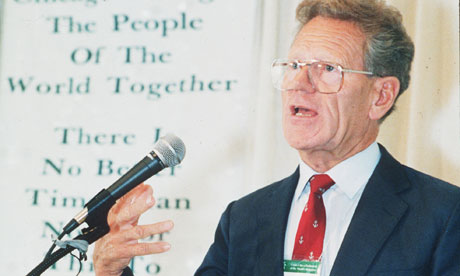
Hans Küng: appeal to priests and churchgoers to confront the Catholic hierarchy. Photograph: returned
One of the world's most prominent Catholic theologians has called for a revolution from below to unseat the pope and force radical reform at the Vatican.
Hans Küng is appealing to priests and churchgoers to confront the Catholic hierarchy, which he says is corrupt, lacking credibility and apathetic to the real concerns of the church's members.
In an exclusive interview with the Guardian, Küng, who had close contact with the pope when the two worked together as young theologians, described the church as an "authoritarian system" with parallels to Germany's Nazi dictatorship.
"The unconditional obedience demanded of bishops who swear their allegiance to the pope when they make their holy oath is almost as extreme as that of the German generals who were forced to swear an oath of allegiance to Hitler," he said.
The Vatican made a point of crushing any form of clerical dissent, he added. "The rules for choosing bishops are so rigid that as soon as candidates emerge who, say, stand up for the pill, or for the ordination of women, they are struck off the list." The result was a church of "yes men", almost all of whom unquestioningly toed the line.
"The only way for reform is from the bottom up," said Küng, 84, who is a priest. "The priests and others in positions of responsibility need to stop being so subservient, to organise themselves and say that there are certain things that they simply will not put up with anymore."
Küng, the author of around 30 books on Catholic theology, Christianity and ethics, which have sold millions worldwide, said that inspiration for global change was to be found in his native Switzerland and in Austria, where hundreds of Catholic priests have formed movements advocating policies that openly defy current Vatican practices. The revolts have been described as unprecedented by Vatican observers, who say they are likely to cause deep schisms in the church.
"I've always said that if one priest in a diocese is roused, that counts for nothing. Five will create a stir. Fifty are pretty much invincible. In Austria the figure is well over 300, possibly up to 400 priests; in Switzerland it's about 150 who have stood up and it will increase."
He said recent attempts by the archbishop of Vienna, Christoph Schönborn, to try to stamp out the uprising by threatening to punish those involved in the Austrian "priests' initiative" had backfired owing to the strength of feeling. "He soon stopped when he realised that so many ordinary people are supportive of them and he was in danger of turning them all against him," Küng said.
The initiatives support such seemingly modest demands as letting divorced and remarried people receive communion, allowing non-ordained people to lead services and allowing women to take on important positions in the hierarchy. However, as they go against conventional Catholic teaching, the demands have been flatly rejected by the Vatican.
Küng, who was stripped of the authority to teach Catholic theology by Pope John Paul II in 1979 for questioning the concept of papal infallibility, is credited with giving the present pope, Joseph Ratzinger as he then was, the first significant step up the hierarchy of Catholic academia when he called him to Tübingen University, in south-west Germany, as professor of dogmatic theology in 1966.
The pair had worked closely for four years in the 1960s as the youngest theological advisers on the second Vatican council – the most radical overhaul of the Catholic church since the middle ages. But the relationship between the two was never straightforward, with their political differences eventually driving a wedge between them. The dashing and flamboyant Hans Küng, by various accounts, often stole the limelight from the more earnest and staid Joseph Ratzinger.
Küng refers to the "heap of legends" that abound about himself and Ratzinger from their "Tübingen days", not least the apocryphal accounts of how he gave lifts in his "red sports car" to the bicycle-riding Ratzinger.
"I often gave him a lift, particularly up the steep hills of Tübingen, yes, but too much has been made of this," he said. "I didn't drive a sports car, rather an Alfa Romeo Giulia. Ratzinger admitted himself that he had no interest in technology and had no driving licence. But it's often been turned into some kind of pseudo-profound metaphor idealising the 'cyclist' and demonising the 'Alfa Romeo driver'."
Indeed the "modest'' and prudent "bicycle-rider'' image that pope-to-be, now 85, fostered for years has all but evaporated since his 2005 inauguration, according to Küng.
"He has developed a peculiar pomposity that doesn't fit the man I and others knew, who once walked around in a Basque-style cap and was relatively modest. Now he's frequently to be seen wrapped in golden splendour and swank. By his own volition he wears the crown of a 19th-century pope, and has even had the garments of the Medici pope Leo X remade for him."
That "pomposity", he said, manifested itself most fully in the regular audiences who gather on St Peter's Square in Rome. "What happens has Potemkin village dimensions," he said. "Fanatical people go there to celebrate the pope, and tell him how wonderful he is, while meanwhile at home their own parishes are in a lamentable state, with a lack of priests, a far higher number than ever before of people who are leaving than are being baptised and now Vatileaks, which indicates just what a poor state the Vatican administration is in," he said, referring to the scandal over leaked documents uncovering power struggles within the Vatican which has seen the pope's former butler appear in court. The trial ends on Saturday.
It was in Tübingen that the paths of the two theologians crossed for several years before diverging sharply following the student riots of 1968. Ratzinger was shocked by the events and escaped to the relative safety of his native Bavaria, where he deepened his involvement in the Catholic hierarchy. Küng stayed in Tübingen and increasingly assumed the role of the Catholic church's enfant terrible.
"The student revolts were a primal shock for Ratzinger and after that he became ever more conservative and part of the hierarchy of the church," said Küng.
Calling Pope Benedict XVI's reign a "pontificate of missed opportunities", in which he had forgone chances to reconcile with the Protestant, Jewish, orthodox and Muslim faiths, as well as failing to help the African fight against Aids by not allowing the use of birth control, Küng said his "gravest scandal" was the way he had "covered up" worldwide cases of sexual crimes committed by clerics during his time as the head of the Roman Congregation for the Doctrine of the Faith as Cardinal Ratzinger.
"The Vatican is no different from the Kremlin," Küng said. "Just as Putin as a secret service agent became the head of Russia, so Ratzinger, as head of the Catholic church's secret services, became head of the Vatican. He has never apologised for the fact that many cases of abuse were sealed under the secretum pontificium (papal secrecy), or acknowledged that this is a disaster for the Catholic church." Küng described a process of "Putinisation" that has taken place at the Vatican.
Yet despite their differences, the two have remained in contact. Küng visited the pope at his summer retreat, Castel Gandolfo, in 2005, during which the two held an intensive four-hour discussion.
"It felt like we were on an equal footing – after all, we'd been colleagues for years. We walked through the park and there were times I thought he might turn the corner on certain issues, but it never happened. Since then we've still kept exchanging letters, but we've not met."
Kung has travelled widely in his life, befriending everyone from Iranian leaders to John F. Kennedy, and Tony Blair with whom he forged close links a decade ago, becoming something of a spiritual guru for the then British prime minister ahead of his decision to convert to Catholicism.
"I was impressed how he tackled the Northern Ireland conflict. But then came the Iraq war and I was extremely troubled by the way in which he collaborated with Bush. I wrote to him calling it a historical failure of the first order. He wrote me a hand-written note in reply, saying he respected my views and thankyou, but that I should know he was acting according to his conscience and was not trying to please the Americans. I was astounded that a British prime minister could make such a catastrophic mistake, and he remains for me a tragic figure." He described Blair's conversion to Catholicism as a mistake, insisting he should instead have used his role as a public figure to reconcile differences between the Anglican and Catholic churches in the UK.
From his book-filled study, where a portrait of Sir Thomas More, the 16th-century English Catholic martyr, hangs on the wall, Küng looks out on to his front garden and a two-metre-tall statue of himself. Critics have called it symptomatic of Kung's inflated sense of his own importance. He is embarrassed as he attempts to explain how it was a gift from his 20-year-old Stiftung Weltethos, (Foundation for a Global Ethic), which operates from his house and will continue to do so after his death.
Far from putting the brakes on his prolific theological output, Küng has recently distilled the ideas of Weltethos – which seeks to create a global code of behaviour, or a globalisation of ethics – into a capricious musical libretto. Mixing narrative with excerpts from the teachings of Confucianism, Hinduism, Buddhism, Judaism, Islam and Christianity, Küng's writings have been incorporated into a major symphonic work by the British composer Jonathan Harvey that will have its London premiere on Sunday at the Southbank Centre.
Küng says the musical work, like the foundation, is an attempt to emphasise what the religions of the world have in common rather than what divides them.

Weltethos was founded in the early 1990s as an attempt to bring the religions of the world together by emphasising what they have in common rather than what divides them. It has drawn up a code of behavioural rules that it hopes one day will be as universally acceptable as the UN.
The work's aim is arguably high-minded – Harvey described the demanding task of writing a score for the text as an "awe-inspring responsibility". But Küng, who has won the support of leading figures including Henry Kissinger, Kofi Annan, Jacques Rogge, Desmond Tutu, Mary Robinson and Shirin Ebadi, insisted its aims were grounded in basic necessity."At a time of paradigm change in the world, we need a common set of principles, most obvious among them the Golden Rule, in which Confucius taught to not impose on others what you do not wish for yourself," he said.

Friday, October 5, 2012

A Catholic Case for the Reelection of President Obama

Comment:  Catholics-read this.  Donald Kommers gets an A+ in understanding Catholic Social teaching and another A+ for communicating it in a way we can all understand....This is the crux of the political battle.


Unlike the election of 2008, economic and fiscal rather than cultural issues are dominating the federal election campaign of 2012, and there is no evidence to suggest that Catholics will divide differently on these matters than other segments of the American electorate. But Catholics who take the social teachings of their church seriously will almost surely reject the presidential candidate who would denigrate programs that assist the poor, adulterate social security, lessen the coverage of medicare or medicaid, oppose a redistributive tax code, and disdain the creative role of government in the face of unrelenting poverty and massive unemployment.

Catholic social teaching revolves around the four bedrock principles of human dignity, common good, solidarity and subsidiarity. The last of these principles, doubtless the one Republicans love best, downplays the role of the state by elevating the importance of voluntary associations such a families, churches, charities, neighborhood associations and other self-governing groups. The principle holds that the independence of these natural orderings is essential to freedom and autonomy. It also affirms that no higher or larger organization should undertake a task that a lower or smaller one can do as well. From the Catholic perspective, this is a clear principle of right political order.

But if private groups or non-state actors are unwilling or unable to meet needs essential for human dignity and the common good, governments are morally required to meet these needs. Similarly, if lower levels of government do not have the will or the resources to meet basic human needs such as medical care or a living wage, higher levels must do so. This too is rock-bottom Catholic social teaching. Informed by the imperatives of human dignity and solidarity, the spirit of this teaching is avidly communitarian and runs against the grain of the unchecked individualism championed by Paul Ryan and other leaders of today's Republican Party. In the hands of serious Catholic thinkers, common good reasoning even rejects the generally accepted utilitarian theory of "the greatest good for the greatest number." John Paul II defined the common good as "the good of all and each individual." In a well-ordered society, therefore, shaped by the moral imparatives of cooperation and interdependence, every human being is entitled, as a matter of right, to all the goods and services needed to live in decency and self-respect. The principle of solidarity requires no less.

The elevation of solidarity has been a nonstop theme in Catholic social teaching. Typical was Pope John XXIII's declaration that "all people have a right to life, food, clothing, shelter, rest, medical care, education, and employment." Not some but all people. With poverty and unemployment at record highs, it is clear that an unregulated market economy will fail to meet these basic human needs. For this reason, state intervention in the economy is as essential today as yesterday when, for example, federal laws were necessary to abolish child labor, to eliminate industrial sweatshops, to prohibit unsafe places of work, to outlaw union busting, to force employers to pay a living wage, to ensure the safety of food and drug products, to clean our air and water, and to regulate and so discipline the financial sector. To cut back on any of these features of the regulatory state or to oppose the great social achievements of recent decades, as Republicans are advocating today, flies in the face of Catholic social thinking.

Mitt Romney and Paul Ryan are telling us that government needs to get out of the way to improve the economy, lift people out of poverty, and reduce unemployment to tolerable levels. Their recipe for doing this is to lower taxes -- on the rich in particular -- cut spending, denude the regulatory state and thus to release the energy of American business and thereby quicken economic growth. But even if the millions of Americans without jobs or security were to plummet by as much as 50 percent under a Romney administration, which Republicans would regard as a massive vindication of their economic strategy, millions of other Americans would continue to live in poverty, remain jobless, and lack shelter, realities Catholic social thought would not accept. One may concede that this teaching cannot prescribe technical solutions to complex social and economic problems, but it nevertheless demands a sound safety net that secures the well-being -- and dignity -- of all persons.

Even while affirming an indispensable role for the private ordering of the economy, Catholic social teaching demands state intervention when necessary to provide for the common good of all. As the bishops of the United States emphasized in their 1986 Pastoral Letter on Catholic Social Teaching and the U.S. Economy, the "market is limited by fundamental human rights." Mindful of increasing poverty, joblessness, and homelessness, moral scandals no less real in 2012, the bishops came out squarely in favor of redistributive taxation, still another principle flatly rejected by Romney-Ryan. "A system of taxation based on assessment according to ability to pay," the bishops declared, "is a prior necessity for the fulfillment of [basic] social obligations." The implication is clear. A graduated income tax based on ability to pay is necessary to support education, provide access to food, insure security in sickness and old age, and expand unemployment compensation when it runs out. Any exclusive dependence on excise or sales taxes for these purposes would disproportionately harm the less well-off and make a mockery of the bishops' preferential option for the poor.

John Paul II was fully in accord with the American bishops when before a Canadian audience he declared that the "needs of the poor take priority over the desires of the rich, the rights of workers over the maximization of profits, the preservation of the environment over uncontrolled industrial expansion, and the production to meet social needs over production for military purposes." (Today's Republican Party rejects every one of these canons.) As for joblessness in particular, Catholic social teaching has always maintained the need for full employment. If private markets cannot provide jobs for all, the state must step in with job-creation programs of its own.

Catholic teaching has often looked to the social democracies of Western Europe as superior models of distributive justice, precisely the models Republicans relish maligning. Catholic voters might be reminded that the postwar founding of social welfare democracies such as Italy and Germany were largely the product of Catholic social thought. As recently as May 31, Cardinal Reinhard Marx, the archbishop of Munich and Freising, acknowledged in a Chicago address the influence of Catholic teaching on the development of Germany's "social market economy," one that nurtures a culture of well being that does not focus on short term profits, economic greed, and the ruthless exploitation of our planet. Catholic voters will have to decide whether this teaching can be squared with the programs and policies of the Republican Party in 2012.

U.S. Bishops Should Advocate Free Birth Control to Cut Abortions/ Nuns Right about "Obamacare" Being Effectiive in Preventing Abortions

From Bishop Bridget Mary Meehan's Blog

Friday, October 5, 2012

"Free Birth Control Cuts Abortions and Teen Pregnancy"/ U.S. Bishops Should Advocate Free Birth Control to Cut Abortions/ Nuns Right about "Obamacare" Being Effectiive in Preventing Abortions
http://blogs.wsj.com/ideas-market/2012/10/05/free-birth-control-cuts-abortion-teen-pregnancy/

By Daniel Akst

"A new study from Washington University in St. Louis finds that giving women free contraception sharply reduces abortions and teen pregnancy compared to the general population. Among participants, abortion was less than half as frequent. And the rate of teenage births was 6.3 per 1,000, far less than the national rate of 34.1 per 1,000.
Unlike the general population, most study participants chose implants or IUD devices, suggesting that when initial cost is not a barrier, women are much more likely to pick these highly reliable means of contraception. The study also suggests that the provision of “Obamacare” giving women in workplace health plans access to contraception without co-pays may be effective in reducing unwanted pregnancies."
Bridget Mary's Reflection:
The U.S. bishops should advocate free birth control to cut abortions. Otherwise, how can they be pro-life? The "Nuns on the Bus "were right about "Obamacare"preventing unwanted pregnancies and abortions. Yes, guys, Sisters sometimes do know best!
Another reason we need women priests and women bishops now!
Bridget Mary Meehan, arcwp, www.arcwp.org

Thursday, October 4, 2012

Woman in Priestly Garb Sounds ‘a Great Echo’

http://www.nytimes.com/2010/09/24/world/europe/24milan.html?_r=0

Woman in Priestly Garb Sounds ‘a Great Echo’

MILAN — While other little girls in her hometown of Nissoria, Sicily, were dressing up and playing house, Maria Vittoria Longhitano would pretend to say Mass, dispensing cookies and chips to her toys for communion. Sometimes, she would even baptize her dolls.
As a child, she prayed to St. Rita — much venerated in Sicily — asking for her intervention to become a priest.
But the Roman Catholic Church has no place for women among its clerical ranks, as the Vatican stated forcefully over the summer when it decreed that the attempt to ordain female priests is to be considered one of the most serious crimes against church law.
Ms. Longhitano’s spiritual journey eventually led her to the Old Catholic Church, a denomination that split from the Roman Catholic Church in the 19th century, mostly over the issue of papal infallibility. She studied theology at the University of Catania.
On May 22 — coincidentally, the feast day of St. Rita — Ms. Longhitano, 35, was ordained a priest in a ceremony in an Anglican church in Rome. She is now known as Mother Vittoria, and is preparing to lead a congregation in Sabbioneta, Lombardy (though last month she celebrated her first Mass in Sicily, where she was on vacation).
There are fewer than 300 practicing Old Catholics in Italy, according to Fritz-René Müller, the Switzerland-based bishop who ordained her. But for Italians unaccustomed to seeing women in priestly garb, Mother Vittoria’s ordination “had a great echo; it was a small earthquake,” he said.
It reverberated especially loudly against a backdrop of mounting dissatisfaction — even in this traditionally Roman Catholic country — with what many perceive as the Vatican’s inadequate response to the global pedophilia scandal sweeping the clergy. Widely covered by the Italian news media, her ordination seemed to present another instance of a changing society at odds with the Vatican and its worldview.
“It was a strong signal, a way of opening the way,” said Mother Vittoria. “Rome is the center of Christianity; I think I gave a sense of hope to sister Catholics.”
Perhaps, but her Roman Catholic sisters will have to bide their time.
In July, the Vatican made revisions to internal laws to include the attempted ordination of women among its “more grave delicts,” or offenses, making it comparable to heresy, apostasy and pedophilia. Since 2008, the ordination of women has carried the penalty of excommunication, both for the woman and the person trying to ordain her.
Equating ordination of women with a crime like pedophilia drew howls of outrage from many Catholics.
“Perhaps those who crafted the document are on to something,” two professors at Seattle University — Fran Ferder, a Franciscan nun and clinical psychologist, and John Heagle, a priest, psychotherapist and canon lawyer — wrote last month in The National Catholic Reporter. “The refusal to allow women into the inner sanctum of ecclesial power may well be related to clergy sexual abuse, and to the Vatican’s impotence in addressing this crime in a truly pastoral way. Is the attempted ordination of women a crime, or is the real crime the refusal to allow it?”
Erin Saiz Hanna, executive director of the Washington-based Women’s Ordination Conference, argued that placing the ordination of female priests in the rank of “highest crime” suggested that the Vatican was on the defensive “because our movement is growing.” She said that about 100 women had become Roman Catholic priests since a group of seven women were ordained in 2002 in a ceremony on the Danube River in Austria — though they are clearly not recognized by the church.
At the time the document was issued, Archbishop Donald Wuerl of Washington, the chairman of the Committee on Doctrine of the United States Conference of Catholic Bishops, said, “Women offer unique insight, creative abilities and unstinting generosity at the very heart of the Catholic Church.”
But, he added, “the Catholic Church through its long and constant teaching holds that ordination has been, from the beginning, reserved to men, a fact which cannot be changed despite changing times.”
Mother Vittoria said that she was actually optimistic about the effects of the recent Vatican pronouncement, and that she believed that the ban on priests could ultimately open the road to having female deacons, who are also not currently allowed in the Roman Catholic Church. “The world is changing, and I see that there’s growing support for women,” she said.
Vatican observers were more doubtful. In fact, the closing of Vatican ranks to women may be leading more people to the open doors of the Old Catholic Church, Bishop Müller said.
“People are coming to us, I think because we are a free Catholic church, and are not dependent on the Vatican’s centralism,” he said. The Italian and Swiss churches are part of the Union of Utrecht, a federation of Old Catholic churches that are in full communion with the Anglican Church. The clergy can marry and have children.
That is not to say that the Old Catholic Church did not have its own growing pains about admitting women to the clergy. The first woman was ordained in Switzerland, for instance, in 2000 after “years of debate,” he said, and some Old Catholic dioceses — Poland, for one — still do not accept the ordination of women. “Polish women don’t want to, but maybe they will in a few years,” he said. Currently women make up about 10 percent of the clergy in Union of Utrecht in Switzerland and in Germany, he said.
Because Italy is predominantly Roman Catholic, it has also gone practically unnoticed that Italian women have taken on central roles in some Protestant faiths. Pastor Maria Bonafede is the moderator of the Waldensian Church; Alessandra Trotta was elected president of the Methodist Church in Italy last year, and Anna Maffei is the president of the Christian Evangelical Baptist Union of Italy.
Even Mother Vittoria has a predecessor in the Old Catholic Church — Mother Teodora Tosatti, who was ordained in 2006 in a ceremony in Bonn, Germany.
The document issued over the summer by the Vatican made it clear that excommunication was in store for anyone involved in the ordination of a woman.
“We were excommunicated in 2008, but we rejected it,” said Bridget Mary Meehan, a spokeswoman for the Roman Catholic Womenpriests organization, who was ordained a priest in 2006 without Vatican consent. “What matters is that we follow our conscience.”

Tuesday, October 2, 2012

New Jersey Archbishop Urges Same-Sex Marriage Supporters To Refrain From Taking Communion

Faithful America
Over the weekend over 20,000 of us joined in sending a message that communion isn't a political weapon to be wielded against those who support marriage equality. Will you sign the petition and help us make it to 30,000?

Dear Diane,


The Archbishop of Newark just sent a pastoral letter, addressed to over 1 million Catholics in his archdiocese, demanding that Catholics who support marriage equality refrain from receiving Holy Communion.
This is a step too far. It's one thing for the bishops to pursue an increasingly conservative political agenda. It's quite another to wield the Blessed Sacrament as a political weapon against anyone who disagrees.
We need a huge public outcry to show Archbishop John Myers that his new position is unacceptable, or we risk other bishops joining him -- and millions of faithful Catholics being denied Holy Communion. Can you sign our emergency petition right now?
Tell Archbishop Myers: Don't use communion as a political weapon.
Thanks!
-- Michael and the whole Faithful America team
Source:


"New Jersey Archbishop Urges Same-Sex Marriage Supporters To Refrain From Taking Communion," ThinkProgress, September 26, 2012http://thinkprogress.org/lgbt/2012/09/26/915071/new-jersey-archbishop-communion/

Former Irish President speaks out on gay sexuality

 McAleese uses establishment voice to speak out on gay sexuality

Monday, October 01, 2012
 
Comment:  Here is an Irish leader, woman, and one who is definately intouch with her feminie divine.  She sees beyond the narrow strokes the hierarchy paints to people and describes well the pain youth feel, hide and try to live with.  How interesting the Irish culture recognizes sexual identity is pinned on youth by their own.... I have seen it time and again in all my years of teaching.  We are obligated  as Christians and Catholics to help the hierarchy catch up with culture. The question is-how do we do this?


IF Mary McAleese wanted to reach teenagers rendered miserable every day by knowing that they’re gay, she picked the wrong programme when she appeared on The Pat Kenny Show to talk about the topic.


Kids in their teens are rarely in a position to listen to that show, even when they’re not on their phones, their iPods, or music programmes. It is fair to assume, then, that her chosen audience wasn’t young gay men and women, but their parents and grandparents, as well as the Catholic Church.

It was an arresting interview. She sounded more presidential than when she was actually president of Ireland. Central to her argument was the prevalence of suicide among young Irish men, a factor often attributed to the overuse of alcohol by young men.

Inevitably, alcohol plays a lethal role in many suicides, particularly of men in their 20s. However, what Mary McAleese was hammering home is that we have a cohort of still younger men dying, and that one of the hidden reasons is their sexuality.

When broken down, the research makes it clear that young gay men are one of the most at-risk groups in the country.

That’s because they grow up in a context of condemnation, where references to being gay are freighted with negativity, if not contempt. The talk of cyber-bullying tends to ignore how teenagers, and indeed pre-teens, can spot, astonishingly early, the subliminal indications that one of their number is gay, and how speedily observation can turn to harassment and stereotyping using social media.

For a 13- or 14-year-old boy, this is horrific. But the youngster’s problems come not single file, but in battalions. For one thing, if they have been reared in a traditional Catholic home, they have heard references to homosexuality as something to be rejected, either because it is a disorder or an evil choice. Last week, Pope Benedict XVI told a meeting of bishops in Castel Gandolfo that homosexuality is "a faulty conception of human nature".

For another, young people pick up references in every gathering, like for example, when a gay man appears on TV and snide comments are made.

It is into that mangled context that the realisation of their own sexuality arrives — and Mrs McAleese made no bones about the nature of its arrival.

"When they make the discovery, and it is a discovery and not a decision," she said, "when they make the discovery that they are gay, when they are 14, 15, or 16, an internal conflict of absolutely appalling proportions opens up".

That internal conflict often, as she put it, drives young gay men into a place that is "dark and bleak".

Mrs McAleese was not being general about the problems facing young gay men. She was specifically stating her belief the Catholic Church is becoming increasingly isolated in its views of homosexuality.

She was stating that belief from a unique position, first of all as a woman who had delivered on her own bridge-building rhetoric, but much more importantly, as an overt and unashamed Church-going Catholic wife and mother.

The solid respectability of who she has been and what she has done for the past 14 years allowed her not just to make key points, but to make sure those points were heard past the static that would have been created had she been anybody else — that static best summed up in the phrase: "Well, she would say that, wouldn’t she?"

Many a middle-aged mother, listening to her, will have wondered about the sexuality of her own son, and perhaps also considered how hard her loving family might be on that son, were he to discover he was gay. Even that concept — discovery rather than choice — would not have been as easily accepted from many speakers other than Mrs McAleese.

She did a great service to families, to the humanity of the Church, and to the teenage boys who won’t have heard her on the programme. And she was rigorous in her line-drawing. When Pat Kenny put to her that the orthodox Catholic position was "love the sinner, hate the sin", she brushed it aside, making a previously respectable device seem suddenly spurious.

Girls of the same age going through the same process of self-discovery did not figure, as is understandable given the framework of suicide within which the issue was being addressed. Not widening the interview to take in lesbian teenagers kept the narrative simple.

Which did not prevent one reader of this column extrapolating from what was said and applying it to herself. In her 20s, working in the manufacturing industry, this individual has yet to tell her parents or her sibling that she is gay, and doubts that she will ever get the courage to do so.

However, she wrote, hearing what Mrs McAleese had to say on the topic gave her new hope. "Although she was talking about young men, she described the internal conflict that goes on inside the head of anyone who ‘discovers’ they have an attraction to the same sex.

"It is head-wrecking stuff. We are brought up in Catholic families. We go to Catholic schools. We get our sense of right and wrong from those places and then we discover, in our fragile, formative teenage years, that something inside us doesn’t fit or match what’s supposed to be normal.

"And it is a terrifying discovery. It is not funny. It is not a ‘get over it’ issue like having thick ankles. The impulse to conform is powerful. No one wants to be the freak.

"Few teenagers are equipped with the mental strength to resist the need for the safety of the closet.

"But the self-denial, self-loathing, confusion, fear and suppression of authentic expression that accompanies the impulse to conform is destructive and inimical to living a fulfilled or happy life. If a person can’t be sure of their own identity, how can they be sure or confident about anything?

AND just because it is no longer illegal doesn’t mean modern Ireland is a "gay-friendly" place, so get over yourself; the world has moved on. No, it hasn’t. Prejudice and hatred is everywhere alive and kicking. I witness some form of homophobia almost every day.

"Anyway, I thought Mary McAleese was courageous and brave to publicly address the issue. I mean what’s it to her? What’s in it for her? She’s a happily married woman. Why should she care? And yet she does.

"I knew from her comments not only had she thought deeply about the plight of young gay men but she empathised with them. I also believe her concern is not human in source but comes from a transcendent, loving, supreme being.

"Her compassion springs from her Christian faith. Mary McAleese prays. She communes with God. I believe she has become a channel of God’s grace and that God is seething with the Catholic Church for the pain it has inflicted on generations of people over the centuries.

"One last thought about McAleese. I get driven more and more into denial when I see extremely camp figures championing the gay cause. They are more tolerated by the general public than respected. Mary McAleese, in contrast, is respected. She is mainstream establishment. People listen to her. She might make a difference."

She has before. She might again.

Monday, October 1, 2012

Tough Talk for America

Tough Talk for America
A Guide to the Presidential Debates You Won’t Hear
By Mattea Kramer
Five big things will decide what this country looks like next year and in the 20 years to follow, but here’s a guarantee for you: you’re not going to hear about them in the upcoming presidential debates. Yes, there will be questions and answers focused on deficits, taxes, Medicare, the Pentagon, and education, to which you already more or less know the responses each candidate will offer. What you won’t get from either Mitt Romney or Barack Obama is a little genuine tough talk about the actual state of reality in these United States of ours. And yet, on those five subjects, a little reality would go a long way, while too little reality (as in the debates to come) is a surefire recipe for American decline.
So here’s a brief guide to what you won’t hear this Wednesday or in the other presidential and vice-presidential debates later in the month. Think of these as five hard truths that will determine the future of this country.
1. Immediate deficit reduction will wipe out any hope of economic recovery: These days, it’s fashionable for any candidate to talk about how quickly he’ll reduce the federal budget deficit, which will total around $1.2 trillion in fiscal 2012. And you’re going to hear talk about the Simpson-Bowles deficit reduction plan and more like it on Wednesday. But the hard truth of the matter is that deep deficit reduction anytime soon will be a genuine disaster. Think of it this way: If you woke up tomorrow and learned that Washington had solved the deficit crisis and you’d lost your job, would you celebrate? Of course not. And yet, any move to immediately reduce the deficit does increase the likelihood that you will lose your job.
When the government cuts spending, it lays off workers and cancels orders for all sorts of goods and services that would generate income for companies in the private sector. Those companies, in turn, lay off workers, and the negative effects ripple through the economy. This isn’t atomic science. It’s pretty basic stuff, even if it’s evidently not suitable material for a presidential debate. The nonpartisan Congressional Research Service predicted in a September report, for example, that any significant spending cuts in the near-term would contribute to an economic contraction. In other words, slashing deficits right now will send us ever deeper into the Great Recession from which, at best, we’ve scarcely emerged.
Champions of immediate deficit reduction are likely to point out that unsustainable deficits aren’t good for the economy. And that’s true -- in the long run. Washington must indeed plan for smaller deficits in the future. That will, however, be a lot easier to accomplish when the economy is healthier, since government spending declines when fewer people qualify for assistance, and tax revenues expand when the jobless go back to work. So it makes sense to fix the economy first. The necessity for near-term recovery spending paired with long-term deficit reduction gets drowned out when candidates pack punchy slogans into flashes of primetime TV.
2. Taxes are at their lowest point in more than half a century, preventing investment in and the maintenance of America’s most basic resources: Hard to believe? It’s nonetheless a fact. By now, it’s a tradition for candidates to compete on just how much further they’d lower taxes and whether they’ll lower them for everyone or just everyone but the richest of the rich. That’s a super debate to listen to, if you’re into fairy tales. It’s not as thrilling if you consider that Americans now enjoy the lightest tax burden in more than five decades, and it happens to come with a hefty price tag on an item labeled “the future.” There is no way the U.S. can maintain a world-class infrastructure -- we’re talking levees, highways, bridges, you name it -- and a public education system that used to be the envy of the world, plus many other key domestic priorities, on the taxes we’re now paying.
Anti-tax advocates insist that we should cut taxes even more to boost a flagging economy -- an argument that hits the news cycle nearly every hour and that will shape the coming TV “debate.” As the New York Times recently noted, however, tax cuts might have been effective in giving the economy a lift decades ago when tax rates were above 70%. (And no, that’s not a typo, that’s what your parents and grandparents paid without much grumbling.) With effective tax rates around 14% for Mitt Romney and many others, further cuts won’t hasten job creation, just the hollowing out of public investment in everything from infrastructure to education. Right now, the negative effects of tax increases on the most well-off would be small -- read: not a disaster for “job creators” -- and those higher rates would bring in desperately-needed revenue. Tax increases for middle-class Americans should arrive when the economy is stronger.
Right now, the situation is clear: we’re simply not paying enough to fund the basic ingredients of prosperity from highways and higher education to medical research and food safety. Without those funds, this country’s future won’t be pretty.
3. Neither the status quo nor a voucher system will protect Medicare (or any other kind of health care) in the long run: When it comes to Medicare, Mitt Romney has proposed a premium-support program that would allow seniors the option of buying private insurance. President Obama wants to keep Medicare more or less as it is for retirees. Meanwhile, the ceaseless rise in health-care costs is eating up the wages of regular Americans and the federal budget. Health care now accounts for a staggering 24% of all federal spending, up from 7% less than 40 years ago. Governor Romney’s plan would shift more of those costs onto retirees, according to David Cutler, a health economist at Harvard, while President Obama says the federal government will continue to pick up the tab. Neither of them addresses the underlying problem.
Here’s reality: Medicare could be significantly protected by cutting out waste. Our health system is riddled with unnecessary tests and procedures, as well as poorly coordinated care for complex health problems. This country spent $2.6 trillion on health care in 2010, and some estimates suggest that a staggering 30% of that is wasted. Right now, our health system rewards quantity, not quality, but it doesn’t have to be that way. Instead of paying for each test and procedure, Medicare could pay for performance and give medical professionals a strong incentive to provide more efficient and coordinated care. President Obama’s health law actually pilot tests such an initiative. But that’s another taboo topic this election season, so he scarcely mentions it. Introducing such change into Medicare and the rest of our health system would save the federal government tens of billions of dollars annually. It would truly preserve Medicare for future generations, and it would improve the affordability of health coverage for everyone under 65 as well. Too bad it’s not even up for discussion.
4. The U.S. military is outrageously expensive and yet poorly tailored to the actual threats to U.S. national security: Candidates from both parties pledge to protect the Pentagon from cuts, or even, in the case of the Romney team, to increase the already staggering military budget. But in a country desperate for infrastructure, education, and other funding, funneling endless resources to the Pentagon actually weakens “national security.” Defense spending is already mind-numbingly large: if all U.S. military and security spending were its own country, it would have the 19th largest economy in the world, ahead of Saudi Arabia, Taiwan, and Switzerland. Whether you’re counting aircraft carriers, weapons systems, or total destructive power, it’s absurdly overmatched against the armed forces of the rest of the world, individually or in combination. A couple of years ago, then-Secretary of Defense Robert M. Gates gave a speech in which he detailed that overmatch. A highlight: “The U.S. operates 11 large carriers, all nuclear powered. In terms of size and striking power, no other country has even one comparable ship.” China recently acquired one carrier that won’t be fully functional for some time, if ever -- while many elected officials in this country would gladly build a twelfth.
But you’ll hear none of this in the presidential debates. Perhaps the candidates will mention that obsolete, ineffective, and wildly expensive weapons systems could be cut, but that’s a no-brainer. The problem is: it wouldn’t put a real dent in national defense spending. Currently almost one-fifth of every dollar spent by the federal government goes to the military. On average, Americans, when polled, say that they would like to see military funding cut by 18%.
Instead, most elected officials vow to pour limitless resources into more weapons systems of questionable efficacy, and of which the U.S. already owns more than the rest of the world combined. Count on one thing: military spending will not go down as long as the U.S. is building up a massive force in the Persian Gulf, sending Marines to Darwin, Australia, and special ops units to Africa and the Middle East, running drones out of the Seychelles Islands, and “pivoting” to Asia. If the U.S. global mission doesn’t downsize, neither will the Pentagon budget -- and that’s a hit on America’s future that no debate will take up this month.
5. The U.S. education system is what made this country prosperous in the twentieth century -- but no longer: Perhaps no issue is more urgent than this, yet for all the talk of teacher’s unions and testing, real education programs, ideas that will matter, are nonexistent this election season. During the last century, the best education system in the world allowed this country to grow briskly and lift standards of living. Now, from kindergarten to college, public education is chronically underfunded. Scarcely 2% of the federal budget goes to education, and dwindling public investment means students pay higher tuitions and fall ever deeper into debt. Total student debt surpassed $1 trillion this year and it’s growing by the month, with the average debt burden for a college graduate over $24,000. That will leave many of those graduates on a treadmill of loan repayment for most or all of their adult lives.
Renewed public investment in education -- from pre-kindergarten to university -- would pay handsome dividends for generations. But you aren’t going to hear either candidate or their vice-presidential running mates proposing the equivalent of a GI Bill for the rest of us or even significant new investment in education. And yet that’s a recipe for and a guarantee of American decline.
Ironically, those in Washington arguing for urgent deficit reduction claim that we’ve got to do it “for the kids,” that we must stop saddling our grandchildren with mountains of federal debt. But if your child turns 18 and finds her government running a balanced budget in an America that's hollowed out, an America where she has no chance of paying for a college education, will she celebrate? You don’t need an economist to answer that one.
Mattea Kramer is senior research analyst at National Priorities Project and a TomDispatch regular. She is lead author of the new book A People’s Guide to the Federal Budget.
Copyright 2012 Mattea Kramer